

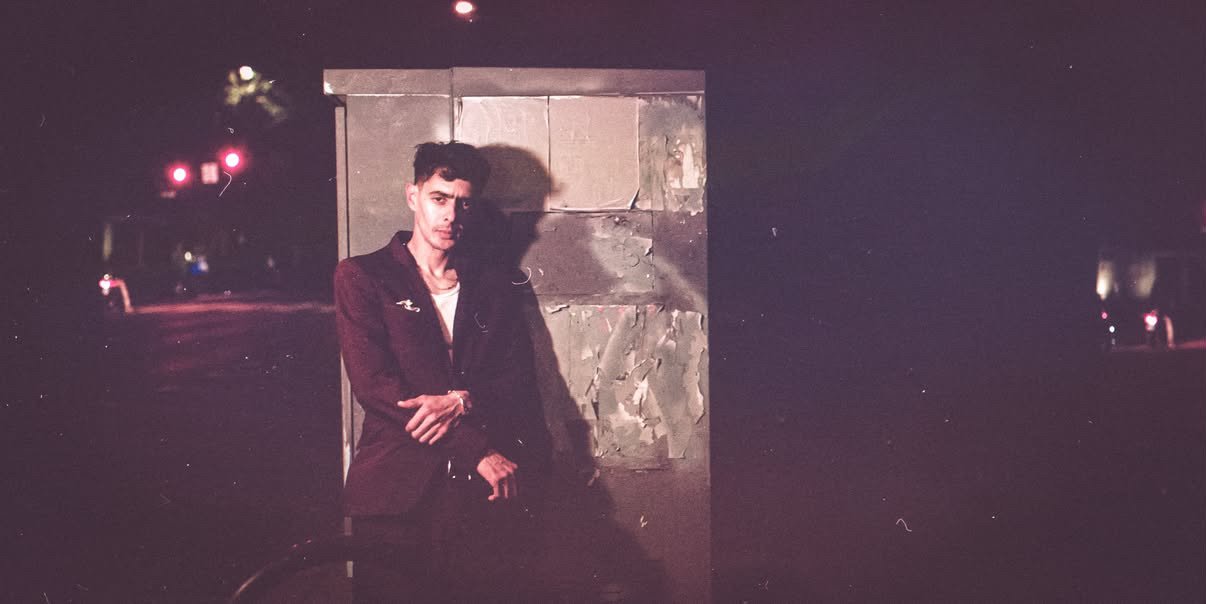
Eduardo posing in street. Photo Credit: Francesca Larco
I recently had the amazing opportunity to sit with creative fellow and musical jedi, Eduardo Colón. It’s always good to catch up with music friends, but one thing I think is important is learning a bit more about each other and sharing honest conversations about shortcomings, ideas, and wins.
It’s definitely what Socrates would have wanted (I think?)
So without further ado, I will let our conversation do the talking!
Eduardo Colón on His Solo Journey, Creative Inspiration, and the Future of DC’s Music Scene
Danie: In a few words, tell the people who you are. What’s your elevator speech?
Eduardo Colón: I’m a Puerto Rican-born musician and creative of all sorts, but music has always been my forte. I’ve been working in music since I was about 16 years old in Puerto Rico, building a career that spanned roughly a decade and a half before I moved to DC.
Currently, I’m taking my first steps into my own solo project, which is something new for me. I’ve always been the guy working behind the scenes or performing as a live musician, but I’d never really managed to do something entirely on my own.
Recently, I signed with Gangstir Rock Records, Orlando Jones’ label, and we’re preparing to release some music, hopefully sometime next month, as long as I meet my deadline!
D: You’ve had an extensive career in music. What inspires you most these days? Is it a person, an experience, or something else in your life?
E: That’s an interesting question because inspiration usually comes spontaneously from different sources.
When I first started making music, a lot of my motivation came from proving people wrong. Whenever somebody told me I couldn’t do something, that made me want to prove them wrong, and I tended to excel.
Kids can be mean sometimes, but I’ve learned that sometimes people see something in you that they don’t understand themselves. I didn’t understand that at first, but eventually, I started using that same motivation in different areas of my life.
Every time you experience pain, you have to make something beautiful out of it.
D: You mentioned that proving people wrong helped motivate you. Does that same motivation drive your creative process, or is the process more about digging into yourself?
E: My creative process is very different from what initially inspires me. Getting motivated is one thing, but getting into a creative mindset and making something from scratch is another.
The pain that inspires an idea might be the seed, but you still have to create the right conditions for that idea to grow. I strongly believe that your environment affects everything, so the first thing I usually do is make sure my space is clean and organized. That’s when the ideas really start flowing.
This is literally my living room, but I have everything set up and ready to go. The moment an idea comes to me, I can turn on my little spaceship and start creating.
Some days, the ideas come naturally, and other days, they don’t. But sometimes, when you least expect it, something really good comes along, and you realize you’re onto something.
Once I have that basic idea, I approach it like painting a canvas. I keep adding layers and refining things until I get the feeling I want. I tend to overthink, so I’m constantly thinking about how I can take an idea to another level.
Songwriting can take a week, or it can take years. It’s all about building those layers and finding the right feel.
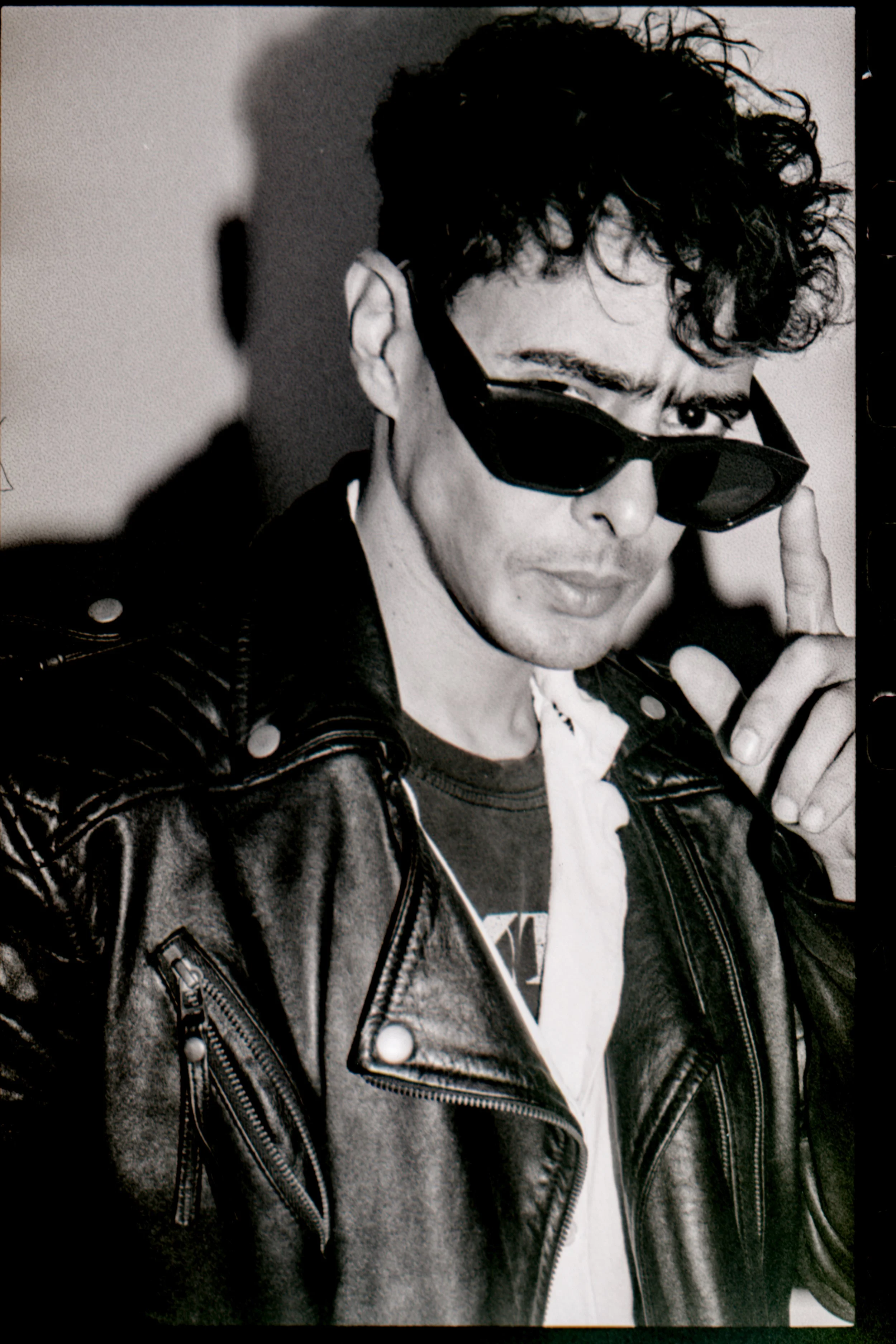
Eduardo looking directly at the camera with shades lowered. Photo Credit: Eduardo Colón Aponte
D: Creative slumps are real, especially for artists. When you experience one, do you try to push through it, take a break, or use that time to reflect? How do you get out of a creative rut?
E: I used to get really caught up in creative slumps, but I realized that approach caused me to burn out. It’s like being a horse with blinders on: you can’t see the bigger picture.
A friend of mine in Puerto Rico once told me about an experiment involving two groups tasked with making the best clay cup. One group was allowed to make only one cup, while the other group had to make as many cups as possible.
The group that made multiple cups ended up producing the best one because they learned from their mistakes and adapted along the way.
That really stuck with me. Sometimes, if you get stuck on one part of the process, you have to let it go for a while and work on something else. When you return to it, everything can suddenly become clearer.
That’s how I’ve written most of the songs I have coming out now.
D: You recently signed with Gangstir Rock Records, which is a huge milestone. What does this opportunity mean for you personally, creatively, and spiritually?
E: Honestly, I’m still surprised that people are interested in working with my solo project, especially at the stage I was at when they found me.
Despite all the achievements I’ve had in music since I was a kid, people always told me I couldn’t sing. Because of that, I never really tried singing until I moved out here to DC and didn’t have anyone to collaborate with.
So, first and foremost, it’s still a shock that they wanted to work with me, especially when the project was still developing.
After I signed, I already had a few songs finished, but I was trying to hold off on releasing them because I wanted everything else in place. I wanted my social media ready and everything planned out in advance.
The label basically told me I was waiting too long to pull the trigger and that they wanted to help me get started. I don’t think I would have released any music at this point if they hadn’t pushed me.
It’s a mixture of a pleasant surprise and that little bit of pressure you sometimes need to finally take the leap and get things moving.
D: You mentioned how much the label’s support has helped you move forward. How important is support to you, and how do you think people can best support artists and their projects?
E: Support has been on my mind a lot lately. The label is helping guide me through releasing these tracks, but I’m also doing a lot of this on my own, in the comfort of my pajamas in my living room.
When I moved to DC, I barely knew anybody. Back home, I was always collaborating with other people. In a way, that became a crutch because I would often build on other people's projects, even though I had plenty of ideas of my own.
Not having that support system here pushed me to take the leap and pursue a solo project, something I probably wouldn’t have done back home.
Going through this process has made me realize how important support really is. I used to take it for granted because networking and finding collaborators came naturally to me.
Now, I’m building everything from scratch, and I understand how much work goes into doing it all yourself. I’ve identified areas where, as talented as I might be, I simply can’t do everything alone.
I’m hoping that, as the music gets out there and the label helps me reach more people, I’ll connect with others who can become part of my team and collaborate with me in the future.
D: There’s often a misconception that asking for help means you aren’t capable of doing something yourself. What would you say to artists who struggle with that?
E: It’s easy to think that asking for help makes you look incapable, but that’s not true. We all have our limits.
Asking for help is something you should do so you can get the best possible result out of your idea. It doesn’t mean you can’t do something. It means you recognize what you need to make that idea as good as it can be.
D: Let’s switch things up with a fun question! There’s a trend going around asking people to name five things they think are worth the money. What are your five? They can be products, experiences, or anything you find valuable.
E: The first thing is definitely food.
I’ve recently realized how important it is to maintain a good diet if you want to function at your best. My mom used to joke that the Snickers commercial about not being yourself when you’re hungry was made because of me!
When I was a kid, if I didn’t eat lunch at school, my mood would be all over the place, and I wouldn’t do my homework. My mom started bringing me snacks when she picked me up, and she noticed that my performance improved.
That lesson has come back to me recently. Now, after stretching in the morning, I make sure I eat breakfast before facing the world.
The same applies to making music. You need a clear mind and the right energy to focus. That’s number one.
D: What else would you add to the list?
E: Number two would be investing in a music setup that works for you.
It doesn’t have to be the most expensive equipment, but you need a setup that allows you to work efficiently. When inspiration strikes, you should be able to act on it immediately.
I remember working with bands at a studio, and they would wait until they got into the studio to start writing songs or experimenting. You shouldn’t have to depend on someone else’s equipment or space just to develop an idea. You should be able to start creating with what you have.
Number three is transportation.
I moved to the city about three years ago, and one of the smartest things I’ve done is sell my car. I walk a lot and ride my bike, which has been great for my body and my mind.
But as a musician, transportation can be important. It’s one thing to get around a small island like Puerto Rico and another to navigate the mainland. Having reliable transportation gives you access to shows, opportunities, and places you might not otherwise reach.
I’ve built biking into my daily routine, and I usually work out for about an hour before heading out. It helps me feel focused. Not having a car hasn’t necessarily been a disadvantage because it has allowed me to reinvent myself, but when it comes to getting to shows and carrying equipment, you can’t do everything on a bike!
Number four is investing in yourself.
I’m not just talking about treating yourself. I mean taking proper care of yourself. If your environment isn’t right and you aren’t taking care of yourself, you won’t be able to put your best work out there.
Your output is a product of your input, so taking care of yourself in whatever way you can is essential.
Finally, number five is networking.
It costs money to go out and put yourself in spaces where you can meet people, so that’s something you should budget for.
My record-label opportunity came about because I happened to be in the right place at the right time. I went out for a drink, someone heard that I was making music, listened to it over the phone, and wanted to connect me with the right people.
That’s similar to how I built connections in Puerto Rico. I went to shows where like-minded people gathered, and over time, people got to know me. Little by little, I built the career I had.
If I hadn’t put myself out there and invested in being present in those spaces, I don’t think I would have gotten as far as I did.
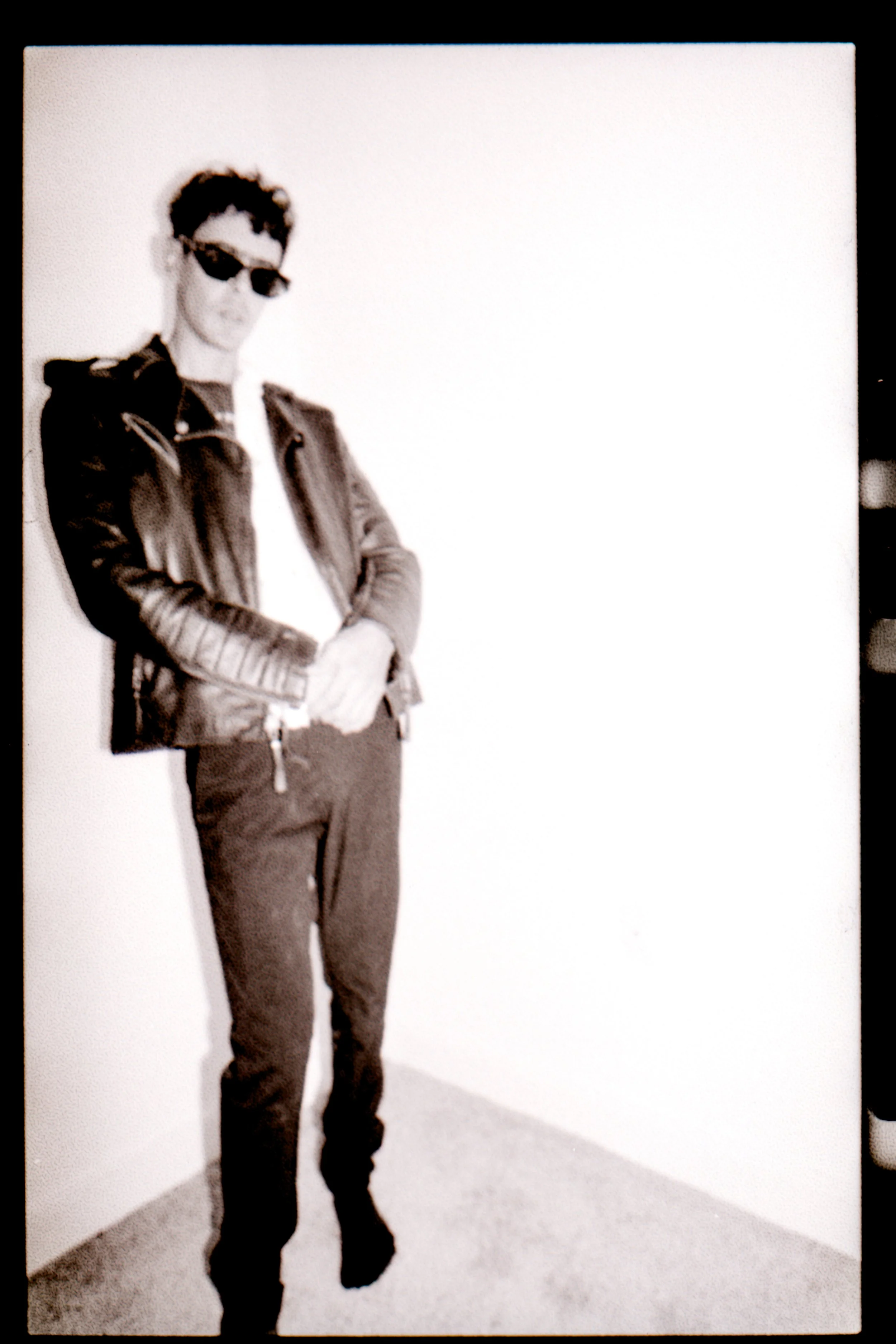
Eduardo posing with arms crossed. Photo Credit: Eduardo Colón Aponte
D: If you met someone for the first time and they asked you to describe your music using three adjectives, what would you say?
E: The first word would be intense.
I’m very aware that my emotions can be intense, and that intensity carries over into my music and pretty much everything I do.
The second word would be energetic, especially when it comes to my live shows.
The third would be relatable.
When I write, I tend to think in terms of storylines and characters. I also write a lot of love songs because I think everybody can relate to love being one of the greatest feelings of all.
Even when I’m writing from a character’s perspective, I want the song to have a story. Just like writing a book, you need a beginning, a middle, a climax, and a resolution. Otherwise, you won’t really draw people into the story.
D: As someone contributing to the DC music scene, what do you feel you can bring to the DMV? DC has so many different artists and sounds, but it can sometimes feel like the city lacks one clearly defined musical identity. What would you like to contribute?
E: That connects to an observation I’ve made since moving here. There are so many active artists and musicians in DC, but compared with Puerto Rico, where I came from, there seem to be fewer clearly defined scenes that consistently bring people together.
In Puerto Rico, there were different niche communities that organized their own events. One example was a festival that started with kids from the punk scene painting murals in what is now San Juan’s art district.
I remember going to the festival in its early days, around 2010 or 2011. It started small and was very community-oriented, but the organizers kept developing it year after year.
Eventually, it grew into something much bigger. They closed off streets, featured murals, added a main stage, and brought together local bars, artists, and musicians. The festival became a platform for major artists, too.
That experience really stayed with me. I have a bachelor’s degree in event production, so I naturally think about how to build something like that.
One of the things I’ve been wanting to do in DC is establish events that happen consistently enough for people to recognize them and look forward to them.
I’ve also thought about creating something like a podcast or digital channel where we record live performances, interview artists, and broadcast the content. That could help generate word of mouth, introduce people to new musicians, and build excitement around the local scene.
The first few events might be small, but if you keep doing them consistently, the growth can become exponential.
Promotion before an event is important, but getting people talking about what happened afterward is just as valuable.
That’s the next big step I want to take once I figure out how to build the infrastructure. It’s not something I can do entirely on my own, so I’ll need the right people and support to make it.
What’s Next for Eduardo Colón?
D: What can we expect from you in the future? Are there any upcoming collaborations with Todos Animales?
E: I don’t think there are any upcoming collaborations with Todos Animales specifically, but I do have a collaboration coming up with someone I made some of my best collaborative tracks with during that time.
His name is Victor Blue, and he was also one of the founding members of Chuwi. If you’ve heard Bad Bunny’s latest album, you might recognize them from their feature on it.
Victor heard my singles and reached out, so we have a collaboration in the works.
Aside from that, I’ve been in touch with a label that wants me to release at least one or two new singles before the end of the year. I’m pushing to finish the production by the end of this month so we can stay on schedule.
I also have a live show in the works for November 21 at a nightclub called 12 After 12. I’m hoping to collaborate with one of the DJs there who runs a group called Salvaje City Invaders. They’ve been putting on live shows over the past few months and want to feature me at their next event.
Hopefully, everything comes together, and the timing lines up with the release of the new singles.
D: Eddie, thank you so much for taking the time to share your story, your journey, and everything you have coming up. I can’t wait to see what’s next for you. People are going to be excited about your music, and you deserve every great thing that’s coming your way!
E: It’s been a pleasure. Thank you so much.
